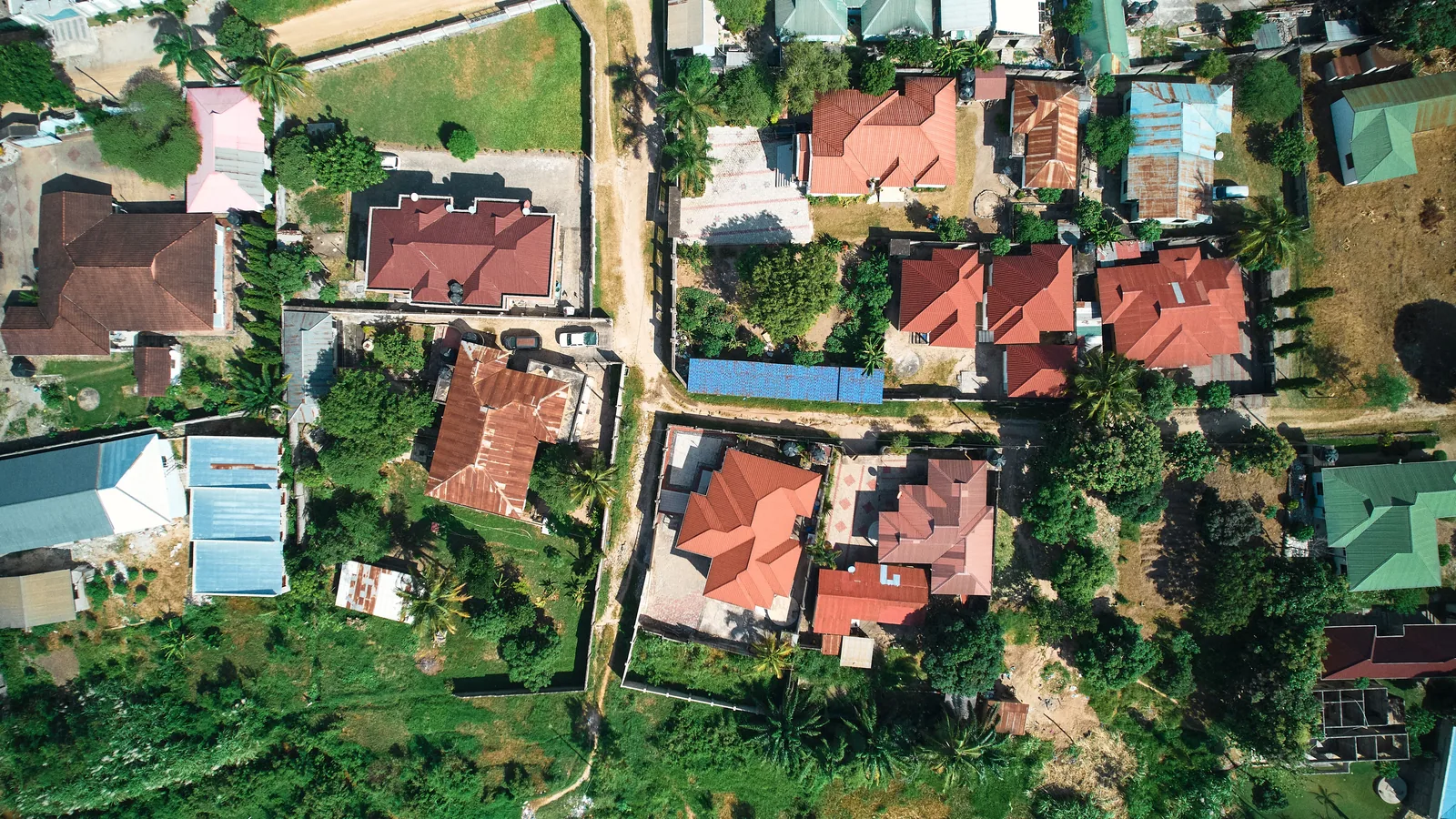
Photo: David Pastory, Pexels
7 June 2026
8 min
· Rédaction Imonga
The Takoradi market at a glance
Takoradi is a port and industrial city in Ghana's Western Region. Its artificial harbour, opened in 1928, handles bauxite cargoes and petroleum flows, while the city serves as the terminus for several Ghanaian rail lines, according to Britannica, consulted on 27 September 2026. This position makes it an employment hub for the oil and maritime sectors, which supports steady rental demand. The 2021 Population and Housing Census by the Ghana Statistical Service, cited by the Ghana Climate Vulnerability Hub, consulted on 27 September 2026, puts the Sekondi-Takoradi Metropolitan population at 245,382. The national housing shortfall is estimated at about 1.8 million units, according to the Ghana Investment Promotion Centre, consulted on 27 September 2026. This structural deficit leaves room for residential projects, whether port-worker housing or executive apartments for oil-sector staff.
Time on market and price behaviour
The formal residential market in Ghana moves at a measured pace. According to analysis by The African Vestor, consulted on 27 September 2026, the average time to sell a formal residential property in Ghana in 2026 is between 90 and 150 days. The same source notes that the sale-to-asking ratio stands at 85% to 95%: most transactions therefore close below the first advertised price. In Takoradi, demand remains stronger than in rural areas, driven by the oil and port economy, the same source adds. Asking prices vary sharply depending on proximity to the port, infrastructure quality and property type; no consolidated public price index exists for the city. The advice remains the same: compare several listings, visit the neighbourhood in person and inspect the building condition before making any offer. If you are inspecting land, see our guide on precautions before buying land.
Leasehold and land tenure
In Ghana, property purchase almost always rests on leasehold, not freehold. The Land Act 2020 (Act 1036), which took effect on 23 December 2020, prohibits the creation of any freehold interest in favour of a non-citizen, according to the legal analysis published by The Ghana Report, consulted on 27 September 2026. Any agreement, deed or conveyance that attempts to do so is void.
For a Ghanaian citizen, the maximum leasehold term is generally up to 99 years, according to The Ghana Report, consulted on 27 September 2026. For a non-citizen, including a diaspora member without Ghanaian nationality, section 10(6) of the Act caps the lease at 50 years at any one time, renewable. The leasehold is registrable at the Lands Commission, negotiable, transferable and can be mortgaged, the same source states. The non-citizen still owns the building outright. If a seller presents a freehold to a foreigner, that title will not withstand legal challenge: you must engage a lawyer or notary independent of the seller to verify the leasehold before signing. Also read our article on avoiding real-estate scams in West Africa to spot warning signs.
Financing and interest costs
Mortgage finance remains expensive in Ghana. In September 2026, the Bank of Ghana held its Monetary Policy Rate at 14.00%, according to data published on the central bank's website, consulted on 27 September 2026, following the 132nd Monetary Policy Committee meeting held on 23-24 September 2026. In addition, the Ghana Reference Rate is set at 10.18% per annum effective 2 September 2026, according to the Ghana Association of Banks, consulted on 27 September 2026. Commercial banks add a margin to this reference rate, so the final cost of credit to the borrower remains high. Ask several institutions for a written quote and check all arrangement fees before committing.
Checks before buying or renting
In Ghana, most land disputes concern title quality. Before any payment, have a search conducted at the Lands Commission to verify who holds the leasehold and whether there are encumbrances or disputes. If the seller is a customary chief (stool), verify that they have the right to alienate and that the Customary Land Secretariat has recorded the transaction. Never accept a freehold if you are not a Ghanaian citizen. For rentals, insist on a written lease, check electricity and water meters, and visit the property during daylight to assess the surroundings. Our viewing check-list covers the essential points to inspect on site. If in doubt about a document, hand it to a notary or lawyer enrolled at the Ghana Bar.
On Imonga
Imonga lists property adverts and professionals in several West African cities. If you are looking for a home in Takoradi, browse the guides for other Ghanaian cities published on the site to compare markets: Accra, Kumasi, Tema or Cape Coast. You can also read our guide on property purchase fees to anticipate all costs.
Frequently asked questions
Can a foreigner buy an apartment in Takoradi?
Yes, but only on a leasehold basis. The maximum term is 50 years renewable for a non-citizen, under section 10(6) of the Land Act 2020 (Act 1036), as analysed by The Ghana Report, consulted on 27 September 2026. The apartment or house itself remains the buyer's full property. The lease is registrable at the Lands Commission and can be passed on by inheritance. Have the lease checked by a notary or lawyer before signing.
What is the average time to resell a property in Takoradi?
The formal residential market in Ghana, Takoradi included, shows an average time to sell of 90 to 150 days in 2026, according to The African Vestor, consulted on 27 September 2026. Well-located properties near the port or industrial zones may find buyers faster, while peripheral properties stay longer on the market.
Should I buy or rent in Takoradi?
It depends on the length of stay and access to finance. Leasehold lets you secure land to build or acquire an existing home, but high interest rates make mortgage credit costly. Renting offers more flexibility, especially for expatriates or oil-sector workers on assignment.
How do I verify that a land title is valid?
Appoint a lawyer or notary to conduct a search at the Lands Commission. They will verify the leaseholder's identity, the absence of encumbrances and the agreement's compliance with the Land Act 2020. Do not compromise on this step.
Are prices negotiable in Takoradi?
Yes. The sale-to-asking ratio stands at 85% to 95% nationally, according to The African Vestor, consulted on 27 September 2026. A firm, documented offer backed by quick payment often secures a discount. To prepare your negotiation, read our guide on how to negotiate a property price.
Sources
- Britannica, Sekondi-Takoradi article: harbour opened in 1928, activities (bauxite, oil), railway terminus, 2010 population. Consulted on 27 September 2026.
- Ghana Climate Vulnerability Hub, Sekondi-Takoradi profile: metropolitan population from the 2021 census (245,382), sub-metropolitan structure. Consulted on 27 September 2026.
- Ghana Investment Promotion Centre, Ghana's Real Estate Sector Report: housing deficit of about 1.8 million units, growing urbanisation in Takoradi. Consulted on 27 September 2026.
- The African Vestor, Ghana Real Estate Market 2026: days on market (90 to 150 days), sale-to-asking ratio (85% to 95%), demand dynamics in Takoradi. Consulted on 27 September 2026.
- The Ghana Report, Freehold, Leasehold, and the 50-Year Rule: prohibition of freehold for non-citizens (Land Act 2020, Act 1036, section 10), 50-year renewable maximum, building ownership, Lands Commission registration. Consulted on 27 September 2026.
- Bank of Ghana, official website: Monetary Policy Rate at 14.00% in September 2026. Consulted on 27 September 2026.
- Ghana Association of Banks, official website: Ghana Reference Rate at 10.18% effective 2 September 2026. Consulted on 27 September 2026.
Read next
Real estate in Tema (Ghana): buying or renting on TDC-managed land
In Tema, Ghana, the question that comes before all others is the lease: who granted the land, for how many years, and on what terms. The rules for buying, registering and renting, with their sources.
Real estate in Kumasi (Ghana): prices, neighbourhoods and land security
Kumasi, Ghana's second city, shows a median residential price of about GH₵ 1.2 million in 2026. This guide details neighbourhoods, buyer closing costs and land law rules that protect the purchaser.
Real estate in Cape Coast (Ghana): land law, renting and formalities
Cape Coast is a historic city in Ghana's Central Region. Its real estate market relies largely on private renting and leasehold. This guide outlines the legal framework and registration formalities.
Real estate in Tamale (Ghana): buying, renting and financing guide
Tamale, capital of Ghana's north, holds over 374,000 people and faces a housing deficit. This guide covers land law, buyer closing costs, and the rental market.
Explore real estate in Takoradi
Ready to move from reading to searching? Browse verified listings or get a free valuation.
From reading to searching
The advice above is worth most when applied to a specific property. 122 listings are online, viewable without an account.