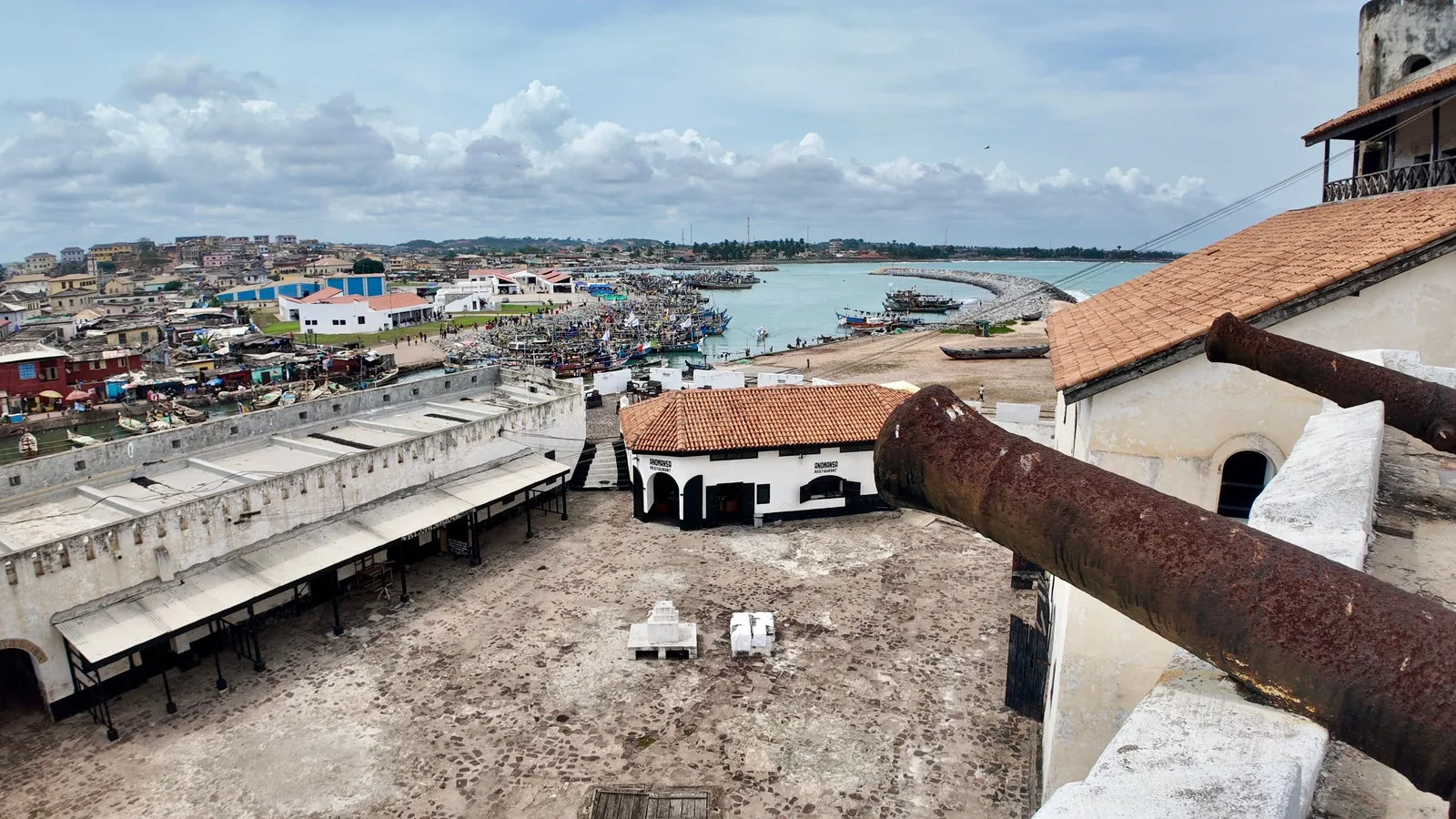
Photo: Owoahene Photography, Pexels
7 June 2026
7 min
· Rédaction Imonga
Cape Coast is a historic city in Ghana's Central Region, home to the University of Cape Coast. Its housing stock totals 17,738 units, of which 66 % are in urban areas, according to a 2025 study drawing on the 2021 Population and Housing Census by the Ghana Statistical Service. The market relies almost entirely on private renting, as public provision has not kept pace with demographic growth. Land rights take the form of leasehold and freehold tenures governed by the 1992 Constitution of Ghana and the Land Act, 2020 (Act 1036) of Ghana. A lawyer or notary can confirm the registration formalities with the Lands Commission.
Land tenure types in Ghana
The Land Act, 2020 (Act 1036) of Ghana sets out six interests in land. Allodial title is the ultimate interest, held by the State, a stool, a skin, a clan or a family; it carries supreme control over the soil and natural resources. Customary law freehold arises from a transaction under customary law and is perpetual and inheritable. Common law freehold is governed by the common law and shares the same duration attributes. Usufructuary interest allows a member of a stool or family to develop an unappropriated portion of land. Leasehold is a lease for a fixed term. Customary tenancy covers use agreements involving rent or a share of produce. The 1992 Constitution of Ghana, Article 266, prohibits the creation of a freehold in favour of a non-citizen; the Land Act, 2020 (Act 1036) of Ghana, section 10, repeats this prohibition and caps any leasehold granted to a non-citizen at fifty years. Any instrument that contravenes these rules is void. A lawyer or notary can verify the nature of the title offered before any signature.
Due diligence and land registration
The Lands Commission is the agency responsible for registering and maintaining land titles in Ghana. To register a transfer, the instrument must be duly stamped, show the date, state the nature of the document, give the names and addresses of the parties, bear the signatures of witnesses with their addresses, carry the solicitor's seal, include an approved plan signed by a licensed surveyor and the Director of the Survey and Mapping Division, and set out the land size and exact location. For stool lands, concurrence from the customary authorities and planning comments from the Town and Country Planning Department are also required. The back of the site plan must be signed by the parties and witnesses. These requirements are listed on the Lands Commission portal. A title search (certificate search) may be requested by submitting an application form, an affirmation and valid photo ID. A lawyer or notary independent from the seller can conduct this search, draft the instrument and follow the registration.
Private renting in Cape Coast
Cape Coast's rental market rests almost entirely on the private sector. A 2025 study on Ghanaian secondary cities reports that the metropolis has 17,738 housing units, 66 % of them in urban areas, based on the Ghana Statistical Service 2021 census. In Cape Coast, demand comes mainly from permanent residents and the university community. Rents vary by location, floor area, building age and access to water and electricity. No official schedule is published; the amount is negotiated directly between landlord and tenant.
Buying or renting formalities
Acquiring property in Cape Coast follows Ghana's general procedure. After a title search at the Lands Commission, the parties execute a transfer contract. The Land Act, 2020 (Act 1036) of Ghana governs the drafting and registration of instruments. The deed must be stamped, accompanied by a certified plan and filed with the Lands Commission. An oath of proof may be required where a party executes by thumb print. For a letting, a written contract normally states the term, rent, deposit and reciprocal obligations. A lawyer or notary can draft or review these documents and ensure that the file meets the Lands Commission's requirements.
On Imonga
Imonga lists real estate adverts and verified professionals across West Africa. For Ghana, the platform offers guides on Accra, Kumasi and diaspora buyers. Rules differ in other countries on the platform, as shown in the Togo land tenure guide.
Frequently asked questions
What land tenure types exist in Ghana?
The Land Act, 2020 (Act 1036) of Ghana recognises allodial title, customary law freehold, common law freehold, usufruct, leasehold and customary tenancy. Freehold is barred to non-citizens under the Constitution of Ghana, Article 266. A lawyer or notary can identify the interest attached to a given plot.
Can a non-citizen hold land in Cape Coast?
The 1992 Constitution of Ghana, Article 266, prohibits freehold for non-citizens. The Land Act, 2020 (Act 1036) of Ghana, section 10, limits any leasehold granted to a non-citizen to fifty years. An instrument that breaches these rules is void. A lawyer or notary can verify title compliance before any transaction.
How do you verify a land title in Ghana?
The Lands Commission maintains the register of titles. A certificate search requires an application form and valid photo ID. The online portal also allows applicants to track the status of a submitted application. An independent lawyer or notary can conduct this check and interpret the results.
What is needed to register a transfer deed?
The Lands Commission requires a stamped, dated instrument signed by the parties and witnesses, bearing the solicitor's seal, an approved plan, the land size, location and, for stool land, evidence of concurrence from the customary authorities. A lawyer or notary can prepare the file and lodge it.
What is the housing profile of Cape Coast?
A 2025 study states that Cape Coast has 17,738 housing units, 66 % of them in urban areas, according to the Ghana Statistical Service 2021 census. The private rental sector dominates the market. Unit characteristics vary by neighbourhood and building age.
What should a rental contract cover in Cape Coast?
A written contract normally sets out the term, rent amount, deposit and maintenance obligations. This helps prevent disputes. A lawyer or notary can draft or review the document in line with local practice in the Cape Coast area.
Sources
- heraldlawgh.com: text of Article 266 of the 1992 Constitution and sections 1 to 10 of the Land Act, 2020 (Act 1036) on land interests and non-citizen restrictions. Consulted on 2026-09-30.
- lc.gov.gh/services/registration-title/: list of documents required for land title registration at the Lands Commission. Consulted on 2026-09-30.
- lc.gov.gh/services/certificate-search/: certificate search formalities. Consulted on 2026-09-30.
- ugspace.ug.edu.gh: data on Cape Coast housing stock (17,738 units, 66 % urban) and analysis of the private rental market. Consulted on 2026-09-30.
- judicial.gov.gh: creation and functions of the Lands Commission (Articles 258 to 265) and heading of Article 266 on non-citizen land ownership. Consulted on 2026-09-30.
Read next
Real estate in Tema (Ghana): buying or renting on TDC-managed land
In Tema, Ghana, the question that comes before all others is the lease: who granted the land, for how many years, and on what terms. The rules for buying, registering and renting, with their sources.
Real estate in Kumasi (Ghana): prices, neighbourhoods and land security
Kumasi, Ghana's second city, shows a median residential price of about GH₵ 1.2 million in 2026. This guide details neighbourhoods, buyer closing costs and land law rules that protect the purchaser.
Real estate in Tamale (Ghana): buying, renting and financing guide
Tamale, capital of Ghana's north, holds over 374,000 people and faces a housing deficit. This guide covers land law, buyer closing costs, and the rental market.
Real estate in Takoradi (Ghana): buying and renting guide
Takoradi's property market draws strength from its port and oil services. This guide covers leasehold rules, lending rates and essential checks before buying or renting.
Explore real estate in Cape Coast
Ready to move from reading to searching? Browse verified listings or get a free valuation.
From reading to searching
The advice above is worth most when applied to a specific property. 122 listings are online, viewable without an account.