Flood-prone land in Togo: how to spot the risk before you buy
Listings, new developments and property professionals across Togo, Benin, Côte d'Ivoire, Senegal and Ghana.
11 November 2026
8 min
· Rédaction Imonga
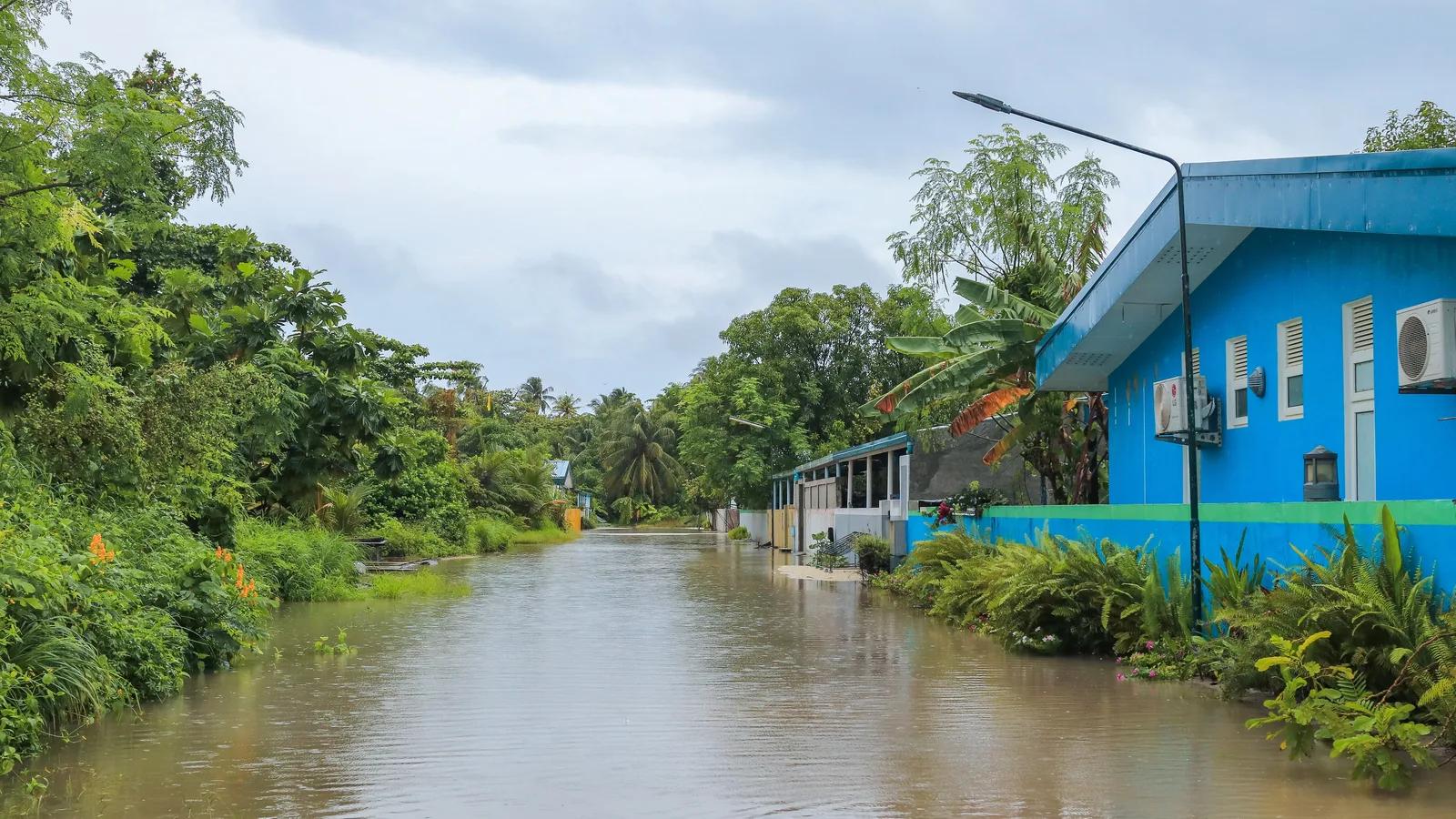
In Togo, no single document tells you that a plot is flood-prone: the risk is found on site, with the neighbours and at the town hall. Greater Lomé is described in the official press as "a chronically vulnerable zone" for flooding (Togonews, 4 March 2026). Visit the plot during or just after heavy rain, ask the neighbours, ask the town hall what it knows about the area, then bring in a surveyor before paying anything.
What the authorities say about risk areas
Low-lying parts of Lomé are known to be exposed. At the validation on 12 September 2024 of a World Bank-funded study by Togo's national civil protection agency (ANPC), the high-risk zones named were "western Lomé, the lowlands, the valleys and the lagoon areas", which have low water storage capacity (L'Émissaire). An ANPC official said that "the current drainage network cannot cope with the intensity of the rain we are experiencing".
It is not only a Lomé issue: a March 2025 article says drain-clearing works are carried out in towns such as Lomé, Tsévié, Kpalimé and Aného, and that dikes have been built where river floods cause damage (Impartial Actu, 26 March 2025).
We found no public plot-by-plot map. The same article mentions a risk management plan focused on identifying flood-prone areas, but we could not consult a map a buyer could apply to a given plot. Do not assume a plot is safe because it appears on no list.
Checks you can do yourself
A visit in the rain tells you more than any plan. A plot that is dry in December can be under water in June. What you can check without a degree:
- Ground level. Is the plot lower than the road and the neighbouring plots? Water runs to low points.
- Marks. Damp stains on neighbouring walls, blackened or peeling wall bases, silt deposits, marsh vegetation.
- Drains. Do they exist, are they clear? The press reports that in Lomé drains and basins are used as dumps, which blocks drainage (Togonews, 4 March 2026). A plot can therefore be hit by a neighbourhood drainage problem, not only by its own position.
- Neighbours. Ask directly: "Does water rise here? How high, for how many days?" Ask several people, not just the seller.
- Existing buildings. Raised houses, protective low walls or filled-in yards are a clue.
A seller or a démarcheur (street agent) may have an interest in downplaying the problem. If you are told to come "only in the dry season", ask to come back after a rain.
Administrative checks
Ask the town hall and the urban planning services what they know about the area. In Togo, any construction requires prior authorisation: this was restated in October 2024 by the mayor of Golfe 5, who also announced a maximum of ten days to process applications by the Division of planning, urban development and housing (mayor's announcement, 26 October 2024). This is a mayor's statement for his commune, not a legal text: confirm the deadline and required documents with your own town hall.
Ask these questions, in writing if possible:
- Is the plot in an area known for flooding?
- Is the neighbourhood covered by an approved subdivision? See our article on approved subdivisions versus informal splits (in French).
- Are there easements or a no-build zone? See easements and no-build zones (in French).
We could not check in the text of the Land and State Property Code (Law No. 2018-005 of 14 June 2018) the exact rule on building in a no-build zone. We therefore do not cite it here. Ask a notary or a surveyor to give you the applicable article in writing.
The surveyor and the notary: what they cover, and what they do not
A surveyor establishes the boundaries and the ground levels of the plot, not the flood risk of the whole neighbourhood. He can provide a topographic survey and a boundary survey, or bornage (see why to hire a surveyor before buying, in French). A level survey shows whether the plot sits below the road, which is useful information for your decision.
The notary checks the title and the legal situation of the plot. He does not rule on hydrology. On land status in Togo, see our guide land status in Togo and the article on the ACD in Togo (in French). For deed costs, see purchase costs, notary and registration (in French).
Surveyor fees are negotiable and vary: ask for a written quote before hiring one. We publish no rate because we have no source.
If the plot is flood-prone: what to weigh
An exposed plot is not necessarily to be ruled out, but it changes the maths. Factor in the cost of any fill, a raised foundation, water evacuation, and the risk that the neighbourhood drainage stays inadequate. We have no sourced figure for these costs: ask a builder and an engineer for quotes, and tell them the plot has flooded.
Negotiate with these factors in mind (see how to negotiate a property price, in French) and do not pay any deposit before completing your checks. For other precautions when buying land, see land-buying precautions and double sales (both in French).
If you buy from abroad, do not rely on photos: have someone you trust visit during the rainy season. Rules in other countries differ; this article covers Togo only.
On Imonga
Land listings in Togo can be browsed on the Lomé property page. Listings do not always describe flood exposure: ask the advertiser and run the checks above. To frame a budget, see property prices in Lomé. Our English guide Buy land in Lomé covers the wider buying process.
Frequently asked questions
Is there an official map of flood-prone land in Togo?
We found no public plot-level map. ANPC validated a study on flood hazards in Greater Lomé in September 2024, but we cannot say it is open to the public. Ask the town hall and ANPC what is available.
When should I visit a plot to judge the risk?
During or right after heavy rain. ANPC and the press report recurring floods in Greater Lomé in the rainy season. A plot visited only in the dry season shows nothing of the risk. Take dated photos and note water marks on neighbouring walls.
Can a surveyor tell me whether the plot floods?
He can measure levels and place the plot relative to the road and neighbouring plots, which says something about run-off. He does not replace a hydrological study or what residents tell you. Ask for a topographic survey and a written quote.
Do I need a permit to build?
Yes: the mayor of Golfe 5 restated in October 2024 that any construction, whatever its size, requires prior authorisation. Documents and deadlines are confirmed with your town hall. Do not start works before you have the decision.
Can I require the seller to disclose flood risk?
We have not verified any Togolese text imposing such a disclosure. Ask the notary what applies, and have the seller's statements about the plot's condition put in writing.
Sources
- Togonews, 4 March 2026: heavy-rain alert, Greater Lomé "chronically vulnerable", works at Agoè-Houmbi, drains used as dumps (accessed 2026-11-11).
- L'Émissaire: ANPC study validated on 12 September 2024, high-risk zones in Greater Lomé (accessed 2026-11-11).
- Impartial Actu, 26 March 2025: drain clearing, dikes, risk management plan (accessed 2026-11-11).
- ANPC, emergency meeting, May 2024: national platform, 13 communes of Greater Lomé, awareness for people living in risk zones (accessed 2026-11-11).
- Golfe 5 mayor's announcement, 26 October 2024: any construction requires prior authorisation, ten-day deadline announced (accessed 2026-11-11).
Read next
Easements and no-build zones in Togo: how to spot a risky plot before you buy
In Togo, a land title does not tell you whether you may build. Here is how to check building bans, the coastal public domain and flood-prone areas before you pay.
Double sale of land in Togo: how to avoid it and what are your remedies
Land sold twice is a real risk in Togo. Under the 2018 Land and Property Code, a land title is definitive and unchallengeable except in case of fraud or error, and remains the best protection. Here are the checks to run before paying, and the remedies available.
ACD in Togo: what buyers must check before purchasing land
The ACD in Togo does not authorize land sales. This customary document must lead to land registration, the only legal path for property transfer.
Buying land in Lomé, Togo: what the law says, what to check, what you pay
In Togo, the law requires land to be registered before it is sold, and the sale deed goes through a notary. Here are the checks to run in Lomé, the steps to a land title and the fees published so far.
Categories
From reading to searching
The advice above is worth most when applied to a specific property. 127 listings are online, viewable without an account.