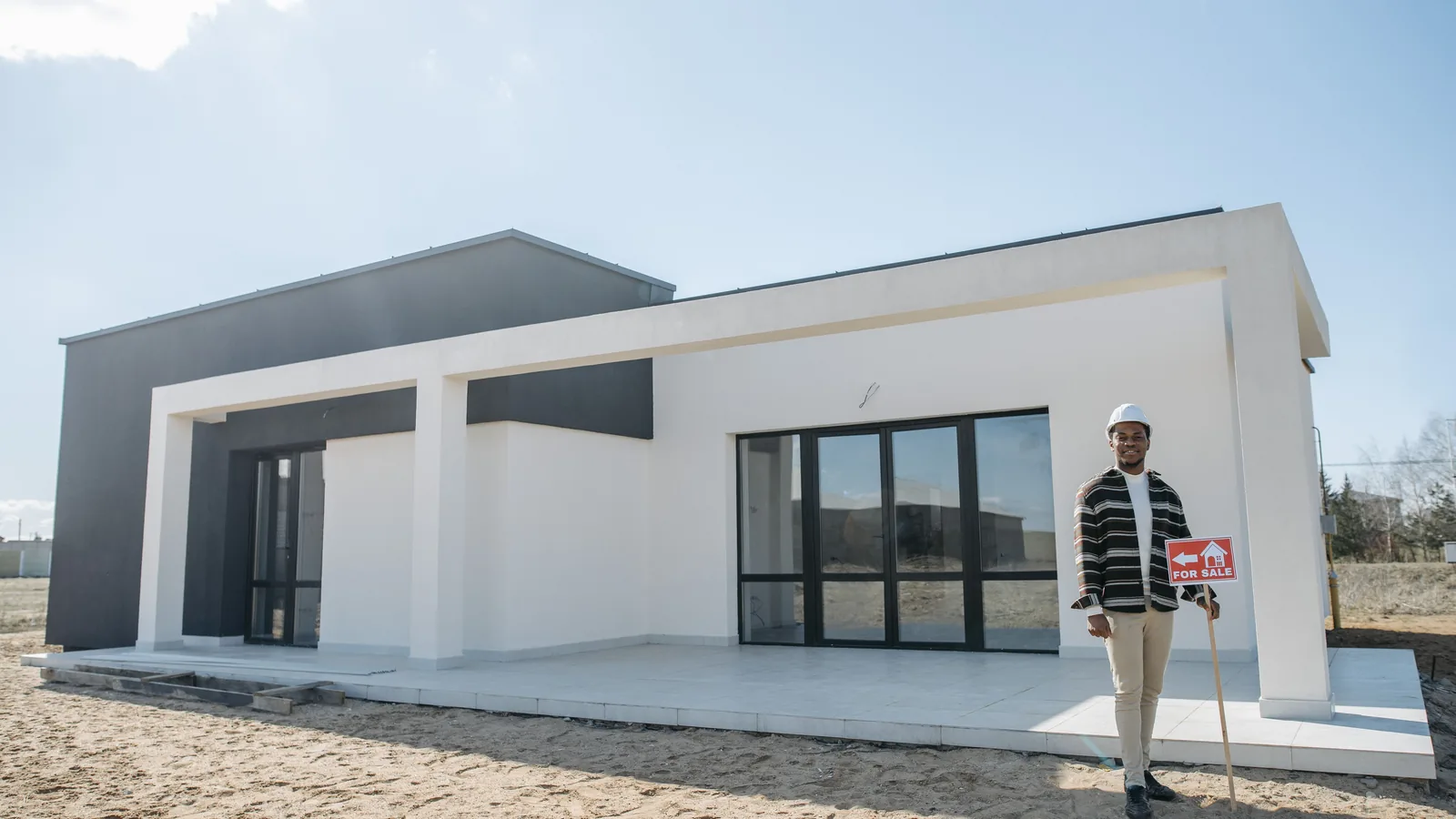
Photo: Pavel Danilyuk, Pexels
18 October 2026
8 min
· Rédaction Imonga
Buying a villa in Dakar starts with a check of the land status. In Senegal, only villas built on plots registered in the Land Register or held under a valid title can be securely sold between individuals. The deed must be authentic, executed before a notary, and then published at the Property and Land Rights Registry to be enforceable against third parties. This formality guarantees the buyer that he becomes the owner of a property free of any undisclosed encumbrance and that his right will be respected by third parties.
Senegal land tenure: national domain and private domain
The land system in Senegal rests on Law No. 64-46 of 17 June 1964 relating to the National Domain. This law classifies land into several categories. In Senegal, the national domain consists of land "not classified in the public domain, not registered and whose ownership has not been transcribed at the Land Registry" (article premier). In Senegal, land in this domain can be registered "only in the name of the State" (article 3). Any transfer of national domain land is therefore void and exposes the parties to penalties.
In practice, in Senegal, a villa offered for sale must therefore sit on land in the private domain, governed by Law No. 2011-07 of 30 March 2011 on the land property regime. This Senegalese law organizes registration in the Land Register and requires land publicity for agreements that transfer a real estate right. In Senegal, a villa sale is not enforceable against third parties until it is recorded at the Registry. Registration gives a certain date to the property right and facilitates subsequent transactions.
Warning: in Senegal, any promise or sale of national domain land is a criminal offence. In Senegal, the seller must provide a land title, an emphyteutic lease or a regular certificate of ownership. Request a certificate of real-estate rights from the Registry before committing. Only a legal professional can reliably interpret the titles presented and legally qualify the land.
Authentic deed and transfer costs
In Senegal, a sale between individuals requires an authentic deed. Only a notary is empowered to execute it in Senegal. He checks the parties' capacity, the title's authenticity and the absence of mortgages or seizures. The notary also verifies the identity of the signatories and ensures that consent is given freely, without defect or error as to the nature of the property. See our guide on how to buy a house in Dakar for the full process.
Acquisition costs consist of several items collected by the State and the notary:
- registration duties, collected by the Direction Générale des Impôts et des Domaines (DGID) on the declared price;
- notary's fees, set by Decree No. 2006-1366 of 8 December 2006;
- land publicity fees for registering the transfer;
- stamp duties on deeds.
These sums are generally paid by the buyer unless otherwise agreed between the parties. The total amount varies according to the price and the nature of the title. Ask your notary for a detailed written estimate before signing the final deed. It is prudent to budget for these costs in advance so as not to jeopardise the signing of the final deed. Our tips on property purchase costs break down each item.
Key steps before signing
The process begins with a promise or compromis de vente. This preliminary agreement sets the price, deadline and conditions precedent. It is often accompanied by a deposit whose amount is negotiable. Have the tax status of the property checked with the DGID before this stage. This check avoids any unpleasant surprises linked to tax arrears that would burden the property.
Next, the notary draws up a certificate of real-estate rights at the Registry. This document attests that the seller is the owner and reveals any mortgages, easements or seizures. For a recent villa, also demand the building permit and the certificate of compliance. The notary can then prepare the draft final deed and submit it to the parties for approval before signing in due form.
If you buy off-plan, the VEFA (sale in future state of completion) is governed by Senegalese law. In Senegal, the developer must provide a Completion or Refund Guarantee (GAR). Read our guide on the advantages and risks of VEFA before committing.
Dakar and its residential market
No official median price for villas is published by Senegalese statistical institutes. Prices vary according to exact location, plot size, standing and age of construction.
Housing demand remains strong. The Agence Nationale de la Statistique et de la Démographie (ANSD) estimates that Dakar's population grows by about 3 % a year, according to ANSD data reported in the study on real estate trends in Senegal. This demographic pressure fuels residential projects, notably in outlying communes such as Diamniadio, where new developments are being completed. Peripheral areas attract buyers seeking more space, while the city centre remains dense.
To view current listings, go to the villas and houses for sale in Dakar page on Imonga. Listings state the title type, location and property features. Regular consultation of listings makes it possible to seize opportunities matching the required title criteria.
Frequently asked questions
Can one buy a villa on national domain land?
No. The law prohibits any sale of national domain land. This land belongs to the State and cannot be the subject of any private real-estate transaction. The buyer must demand a land title or an emphyteutic lease. It is strongly advisable to consult a notary or lawyer before any promise to verify the legal quality of the land.
What is a land title in Senegal?
It is a definitive document issued after registration in the Land Register. It proves ownership and guarantees the real right over the property. Law No. 2011-07 established it to secure holders of real estate rights. This document replaces older certificates of ownership and constitutes the safest proof of property rights in Senegal.
Is a notary mandatory to buy a villa?
Yes, for sales between individuals. The deed must be authentic. The notary verifies titles, drafts the deed, collects registration duties and ensures land publicity. For any question regarding the allocation of costs or the drafting of clauses, it is recommended to seek the assistance of a notary or lawyer.
How much are the acquisition costs?
There is no single flat rate. Costs include registration duties, notary's fees set by decree, land publicity fees and stamps. The notary prepares an estimate on request. The definitive amount can only be established after the notary has examined the file, assessing the complexity of the transaction and the nature of the formalities required.
What should be checked before signing a compromis?
The land title or lease, the certificate of rights at the Registry, the building permit for new villas, and the absence of unpaid rents or service charges if the property was leased. This due diligence reduces the risk of subsequent disputes and secures the reciprocal commitment of the parties.
Is off-plan purchase possible for a villa?
Yes, under the VEFA regime. The developer must hold administrative authorizations and a Completion or Refund Guarantee. The buyer pays in instalments according to construction progress. A notary or lawyer can examine the guarantees offered and ensure that the contract clauses comply with current legislation.
Sources
- Law No. 64-46 of 17 June 1964 relating to the National Domain: defines the national domain and the prohibition on registration in the name of individuals.
- Law No. 2011-07 of 30 March 2011 on the land property regime: organizes registration, land publicity and real estate rights.
- M. Ndiaye, "Les transactions immobilières au Sénégal", Revue de l'ERSUMA, 2020: analyses the prohibition of sales on national domain land, the authentic deed and the notary's role.
- Decree No. 2006-1366 of 8 December 2006 setting notaries' fees: sets notary fees.
- Réalités Sénégal, "Les tendances 2025 du marché immobilier au Sénégal": Dakar demographic growth, VEFA and expansion zones.
Read next
How to Buy a House in Dakar, Senegal: Title, Notary and Fees
Buying a house in Dakar requires checking the land title, signing an authentic deed before a notary and publishing the transfer in the land register. This guide covers the steps, required documents and costs under Senegalese law.
Apartment for sale in Abidjan : title deed, co-ownership and transfer taxes in Côte d'Ivoire
Purchasing an apartment in Abidjan requires verifying the title deed or ACD, co-ownership rules and transfer fees set by the Ivorian tax authority.
Real estate in Dakar: land titles, leases, délibérations, buying costs, renting and land traps
Renting or buying in Dakar: what land titles, leases and délibérations are worth, the costs set by the Tax Code, the two-month deposit cap of the 2023 decree and the land freezes. No invented prices: Imonga has no listings in Senegal.
Real estate prices in Kara, Togo: what drives land and housing costs
In Kara, the price of land or housing depends on the land title, road access, infrastructure, and demographic pressure. There is no official price list.
From reading to searching
The advice above is worth most when applied to a specific property. 119 listings are online, viewable without an account.