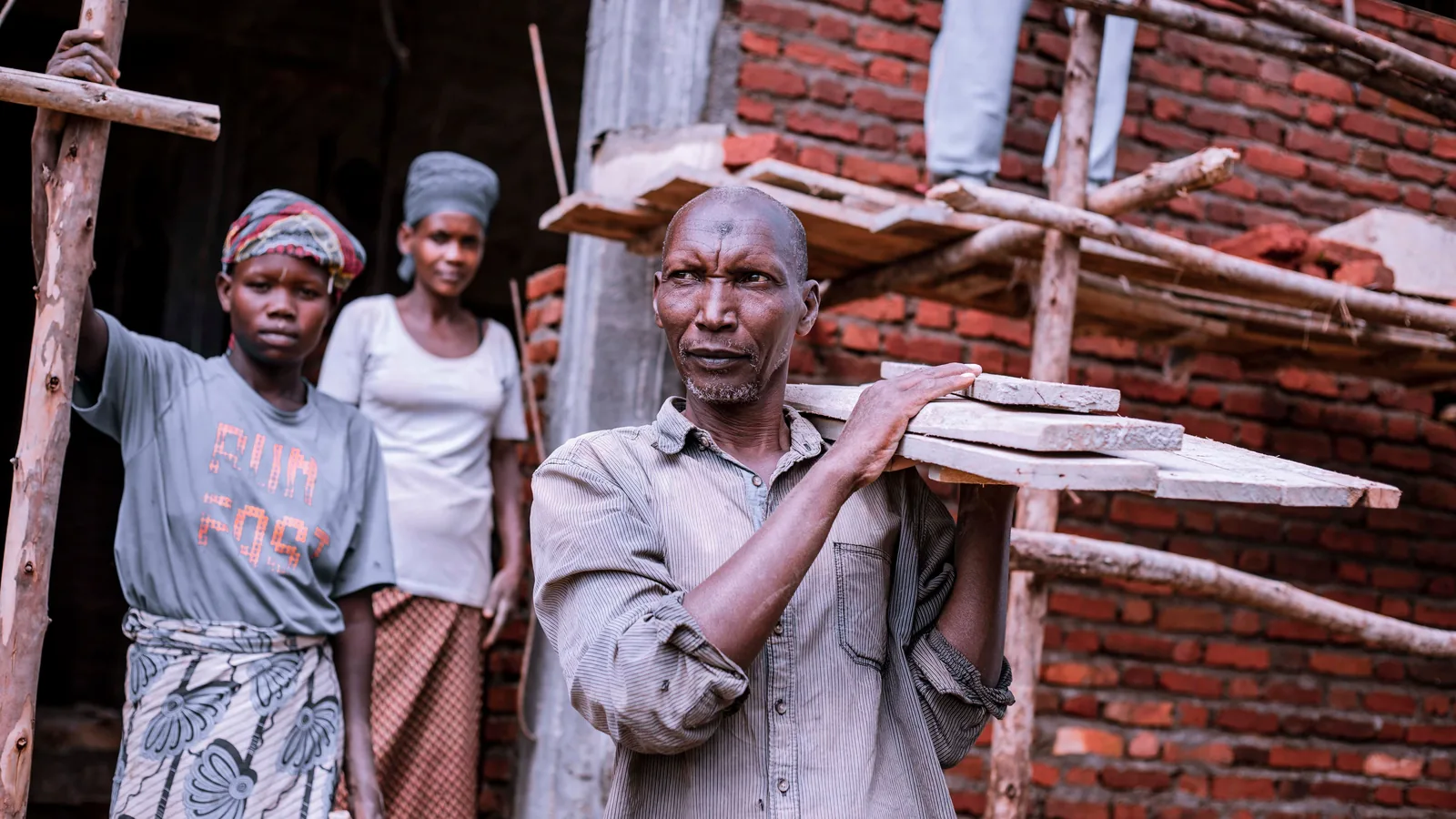
Photo: Safari Consoler, Pexels
10 May 2026
8 min
· Rédaction Imonga
In Togo, there are four ways to pay for a property: a bank loan, a housing loan from a microfinance institution, instalments negotiated with the seller or developer, and savings. The cost of bank credit is capped: according to the BCEAO (notice consulted on 11 October 2026), the usury rate for banks has been 14.0% a year since 1 June 2026. When a bank takes a mortgage, the OHADA law that applies in Togo only allows it on registered property. Your land title therefore matters as much as your payslip.
Bank loans in Togo: a capped cost, a rate to get in writing
A bank cannot lend to you above the usury rate. According to BCEAO notice no. 007-12-2025, dated 31 December 2025 and consulted on 11 October 2026, the WAMU Council of Ministers, meeting in Cotonou on 29 December 2025, set the following ceilings, effective from 1 June 2026:
| Lender | Usury rate |
|---|---|
| Banks | 14.0% a year |
| Credit financial institutions, microfinance institutions | 24.0% a year |
That ceiling is not the rate you will get. The actual rate depends on the bank, the term, your income and the security offered. We found no public, readable and current table of mortgage rates bank by bank in Togo, so we publish none. Ask two or three banks for a written offer showing the rate, the arrangement fees, the insurance, the total cost of credit and the repayment schedule. Compare total costs, not monthly payments.
The deposit required and the share of the price a bank will finance are not published either: they are discussed at the branch. If you live abroad, first ask in writing whether the bank accepts income earned outside Togo. To frame your budget before the meeting, look at houses for sale in Lomé, at prices recorded in Lomé and at the breakdown of purchase costs (notary, registration).
Mortgage: no security without registered property
No: as a rule, land without a land title (titre foncier) cannot be mortgaged. The rule comes from the OHADA Uniform Act organising securities, adopted in Lomé on 15 December 2010, and Togo is an OHADA member state. Its article 192 reads: “Sauf disposition contraire, seuls les immeubles présents et immatriculés peuvent faire l'objet d'une hypothèque.” In plain terms: unless otherwise provided, only existing, registered property can be mortgaged.
Three other articles of the same act directly concern the borrower:
- article 195: the deed creating the mortgage must be “inscrit conformément aux règles de publicité” (registered under the publicity rules), and the mortgage ranks from the date of its registration;
- article 196: registration is valid for a fixed period, “dans la limite de trente ans au jour de la formalité” (thirty years at most from the date of the formality);
- article 198: an unpaid creditor who does not pursue a forced sale may ask a court to award them the property in payment, but “Cette faculté ne lui est toutefois pas offerte si l'immeuble constitue la résidence principale du constituant” (not if the property is the main residence of the person who granted the mortgage).
On the Togolese land side, the press summed up the land and state property code adopted in June 2018 as follows: its articles 161 and 162 “proscrivent la vente, le transfert, l'échange de toute propriété si celle-ci n'a pas été immatriculée au préalable”, meaning they prohibit the sale, transfer or exchange of any property not registered beforehand (Afrik.com, 16 November 2018). We could not re-read those two articles in the official text: have a notary confirm their wording. So before building a loan file, check that the property is registered. Our guide to land status in Togo covers the documents you will come across. A notary or a lawyer should read the title and the loan deed before you sign anything.
Irregular income: housing microfinance and CRRH-UEMOA refinancing
Yes, housing loans exist outside banks in Togo. According to a press release published by Financial Afrik on 3 August 2021 (consulted on 11 October 2026), CRRH-UEMOA and CECA (Coopérative d'Épargne et de Crédit des Artisans, a Togolese mutual microfinance institution) signed an agreement in Lomé on 29 July 2021 to refinance housing loans for households with modest or irregular incomes. The CRRH-UEMOA chief executive mentions loans of up to 15 million over a maximum of 10 years (the sentence gives no currency; the release counts in FCFA). Those terms date from 2021: ask CECA for today's.
CRRH-UEMOA does not lend to individuals: it refinances the housing loans of banks and decentralised financial systems (SFD, the microfinance sector). According to the World Bank (7 November 2023, consulted on 11 October 2026), loans supported this way in the WAEMU area are repayable over 10 to 15 years, and CECA-Togo cites a 10-year term for its housing loans. According to Togonews, carried by AllAfrica on 26 November 2025, 64 commercial banks in the Union take part in the mechanism, including Coris Bank International Togo, which became a shareholder at that date.
Two things to know. The cost ceiling is higher than at a bank: 24.0% a year for microfinance institutions, according to the same BCEAO notice. And since 17 May 2024, a housing loan guarantee (GPL), launched in Lomé by the African Solidarity Fund and CRRH-UEMOA, has shared part of the credit risk with banks and SFDs, as reported by Financial Afrik. That guarantee protects the lender, not you. Ask your bank or cooperative whether it is refinanced by CRRH-UEMOA and what maximum term it grants.
Instalments and savings: no bank, but still a deed
Paying the seller or developer in instalments is possible, but no public source sets the terms: the number of payments, the deposit and the penalties are negotiated contract by contract. We found neither a scale nor a readable Togolese text on staged payments, so there are no figures here. Insist on a written contract, a schedule tied to verifiable milestones (signature, construction progress, handover of keys, transfer of title, known locally as mutation) and a receipt for every payment.
The risk is not the rate. It is paying for a property that never ends up in your name. Have the registration and the seller's identity checked before the first payment, and use a notary for the deed. Our articles on buying off-plan and on property scams list the checks. Savings (personal, tontine, dedicated account) spare you the interest, not the checks: land for sale in Lomé paid for in cash deserves the same scrutiny.
These rules apply to Togo; they differ in other countries, as our article on rent-to-own in Dakar shows.
Frequently asked questions
What is the mortgage rate in Togo?
There is no single rate. The only figure common to all banks is the ceiling: 14.0% a year since 1 June 2026, according to BCEAO notice no. 007-12-2025 (consulted on 11 October 2026). The rate for your file is the one in the bank's written offer, together with fees and insurance.
Can I get a bank loan using land without a land title?
Not by mortgaging it. Article 192 of the OHADA Uniform Act on securities limits mortgages, unless otherwise provided, to property that is “présents et immatriculés” (existing and registered). The bank may consider another form of security, but that is its decision. Have a notary check the status of the land before you apply.
Can I borrow with informal or irregular income?
That is the group targeted by the agreement signed in 2021 between CRRH-UEMOA and CECA, according to Financial Afrik (3 August 2021): craftspeople, traders and employees who are members of the cooperative. Final approval depends on the institution and on your file. Ask CECA or your own cooperative directly about its current terms.
Over how many years can I borrow?
Terms are not published bank by bank. One available benchmark: the World Bank (7 November 2023) describes loans refinanced by CRRH-UEMOA as repayable over 10 to 15 years in the Union, and cites 10 years for CECA-Togo housing loans. The term you are offered appears in your lender's written offer.
Sources
- BCEAO, notice no. 007-12-2025: usury rate of 14.0% (banks) and 24.0% (credit financial institutions, microfinance) from 1 June 2026. Consulted on 11 October 2026.
- OHADA Uniform Act organising securities, articles 190 to 202: mortgage rules. Consulted on 11 October 2026.
- OHADA, list of uniform acts: date and place of adoption of the act on securities. Consulted on 11 October 2026.
- OHADA, member states: Togo is one of them. Consulted on 11 October 2026.
- Afrik.com, 16 November 2018: summary of articles 161 and 162 of Togo's land and state property code. Consulted on 11 October 2026.
- Financial Afrik, 3 August 2021: CRRH-UEMOA and CECA agreement, amount and term mentioned. Consulted on 11 October 2026.
- World Bank, 7 November 2023: terms of refinanced loans, CECA-Togo. Consulted on 11 October 2026.
- Financial Afrik, 17 May 2024: launch of the housing loan guarantee in Lomé. Consulted on 11 October 2026.
- Togonews via AllAfrica, 26 November 2025: Coris Bank International Togo a CRRH-UEMOA shareholder, 64 banks. Consulted on 11 October 2026.
Read next
Buying land in Lomé, Togo: what the law says, what to check, what you pay
In Togo, the law requires land to be registered before it is sold, and the sale deed goes through a notary. Here are the checks to run in Lomé, the steps to a land title and the fees published so far.
Rent or buy in Togo: what the rules say, what it costs, how to decide
In Togo, renting costs a few months of rent upfront, while buying requires a registered property, a notary and fees. Here are the sourced rules and a method to decide.
Diaspora: how to finance a property purchase in Togo from abroad
FCFA account, loan from a Togolese bank, legal rate cap, exchange rate and notary: what the sources establish about financing a property in Togo from abroad.
Buying land in Kara, Togo: what the Land Code says and what to check before you pay
In Kara, as everywhere in Togo, a land sale requires a registered plot and a notarial deed. The rules, the checks to run, and what is (and is not) known about costs and timelines.
From reading to searching
The advice above is worth most when applied to a specific property. 122 listings are online, viewable without an account.